2025年11月27日星期四

Why I’m Betting on a 10x Surge in Silver----Jesse Colombo


In today's report, I want to talk about an exciting prospect that I firmly believe in and am personally investing in. I expect silver to surge at least tenfold from its current price, which would mean a move from around $53 an ounce today to at least $500 an ounce.
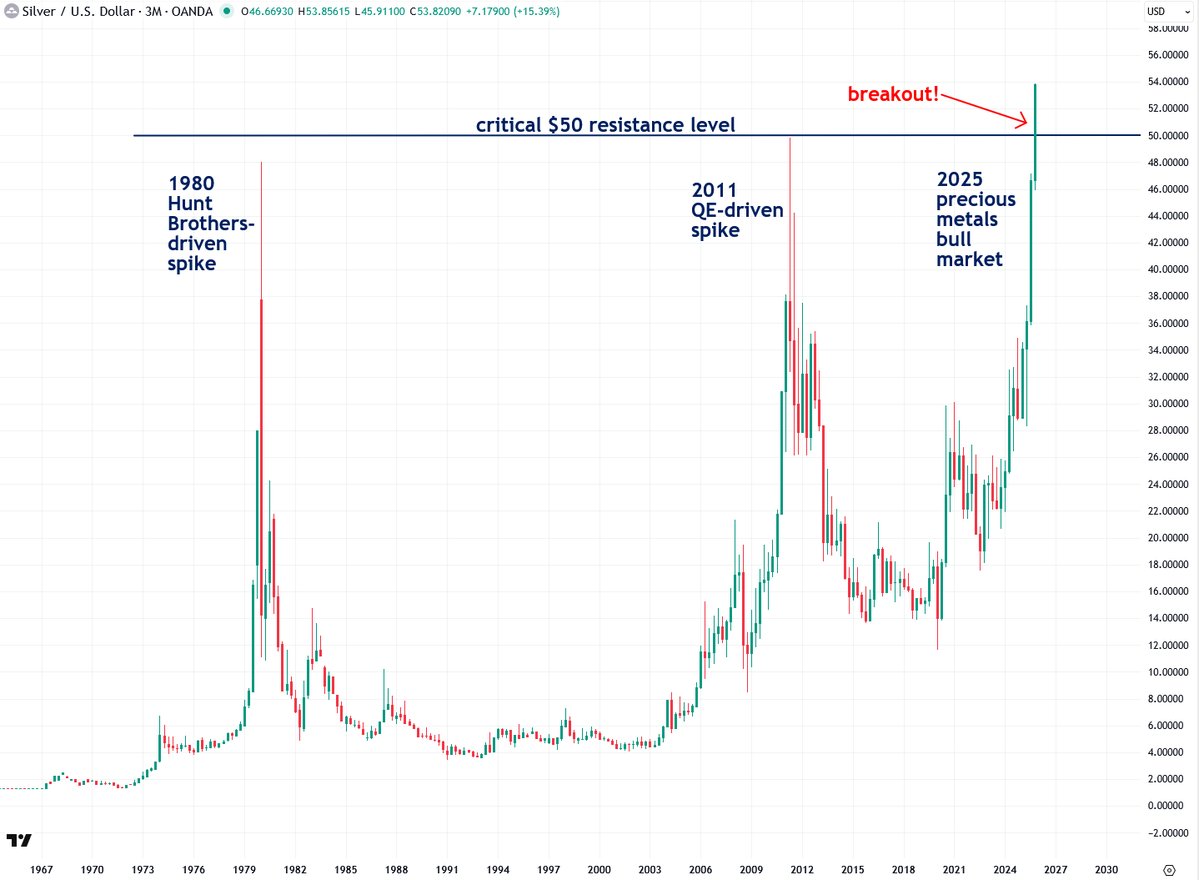
To understand this setup, let’s start by looking at the long-term price chart of silver going all the way back to the 1960s. Next, I want to draw your attention to the critical $50 level, which marked the peaks of the last two major silver bull markets in 1980 and 2011, both of which were followed by significant declines.
But a major development is happening as we speak as silver finally breaks above the all-important $50 psychological level. This signals the start of a powerful new secular bull market, which typically lasts for a decade or more. That indicates silver still has a long way to run.
$50 level in silver
With silver now trading above $50, an all-time high, no one who has ever purchased silver is currently sitting on a loss.
I believe this breakout is about to spark a major shift in investor sentiment toward silver, which has long been viewed as a lagging and underperforming asset compared to flashier alternatives like high-flying tech stocks and cryptocurrencies.
Many of the new investors that are about to enter the silver market will come from the younger generations that aren’t burdened by the past disappointments of 1980 and 2011 that shaped the views of older, battle-weary silver investors.
Although investment demand for silver has been subdued over the past decade, I expect it to increase significantly as the bull market continues to strengthen. U.S. silver ETFs, in particular, have only recently started accumulating silver more actively.
For example, the iShares Silver Trust (SLV), the largest U.S. silver ETF, increased its physical holdings from 417.5 million ounces to 496.53 million ounces over the past two years. That 19% rise is modest compared to the 160% surge in silver prices over the same period. I believe that gap will close soon, driving silver prices much higher.
SLV silver ETF chart
There are many reasons why I expect silver to surge from here rather than fall from the $50 level as it did in 1980 and 2011. One key reason is that silver remains far cheaper in real terms today compared to those past peaks when measured against a wide range of benchmarks. This indicates that silver still has substantial room to rise.
To further reinforce my point above, I also want to show you the ratio of silver to the U.S. M2 money supply, indexed to 100. This may be an even more accurate measure of inflation than the more commonly used Consumer Price Index (CPI). After all, the root cause of inflation is growth in the money supply itself. As Milton Friedman, the Nobel Prize–winning economist, famously said, “Inflation is always and everywhere a monetary phenomenon.”
This chart shows that although silver has just surpassed the same nominal price of $50, its real-world price is much lower than it was in 1980 and 2011. For example, in 1980 the ratio was 1,038, in 2011 it was 176, and now it is just 66. I see this as clear evidence that, despite its recent gains, silver’s bull market is nowhere near being long in the tooth.
silver vs. money supply chart
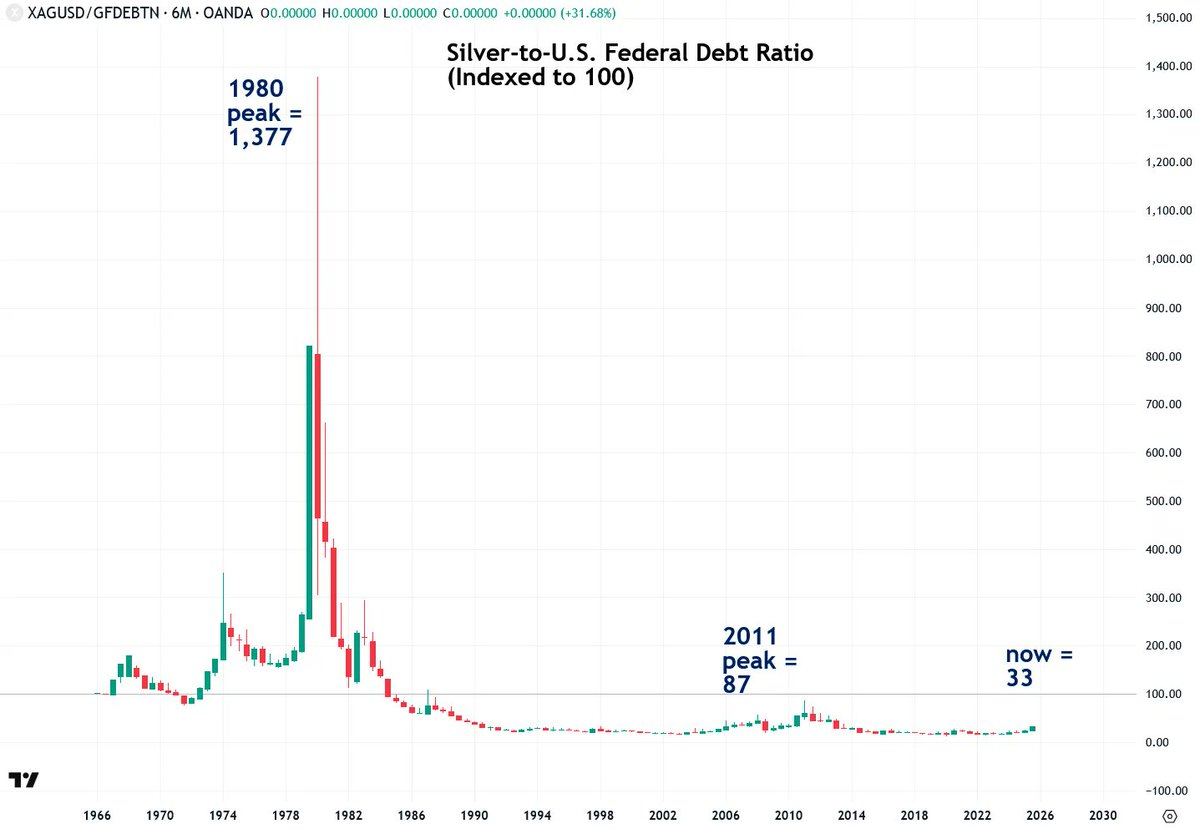
Another eye-opening metric that confirms silver is still extremely cheap is the ratio of silver to the U.S. national debt, which now stands at $37.8 trillion and is growing at an alarming pace of $1 trillion every 100 days with no signs of slowing. This is an important metric because it shows whether the price of silver has kept pace with the growth of the national debt, and the answer is clearly no.
 
 
If you’re enjoying this free sample report and want more content like it, there’s plenty more where that came from.
Just to sign up as a free or paid subscriber to my bestselling precious metals and economic crisis-focused newsletter, The Bubble Bubble Report.
The Bubble Bubble Report homepage screenshot
The chart, indexed to 100, shows that this ratio was 1,377 at the 1980 peak, 87 at the 2011 peak, and only 33 today. This indicates that silver has substantial room to catch up to the expanding national debt. In that context, $53 silver is not expensive by any measure, and a move to $500 an ounce is far from inconceivable.
silver vs. U.S. national debt chart
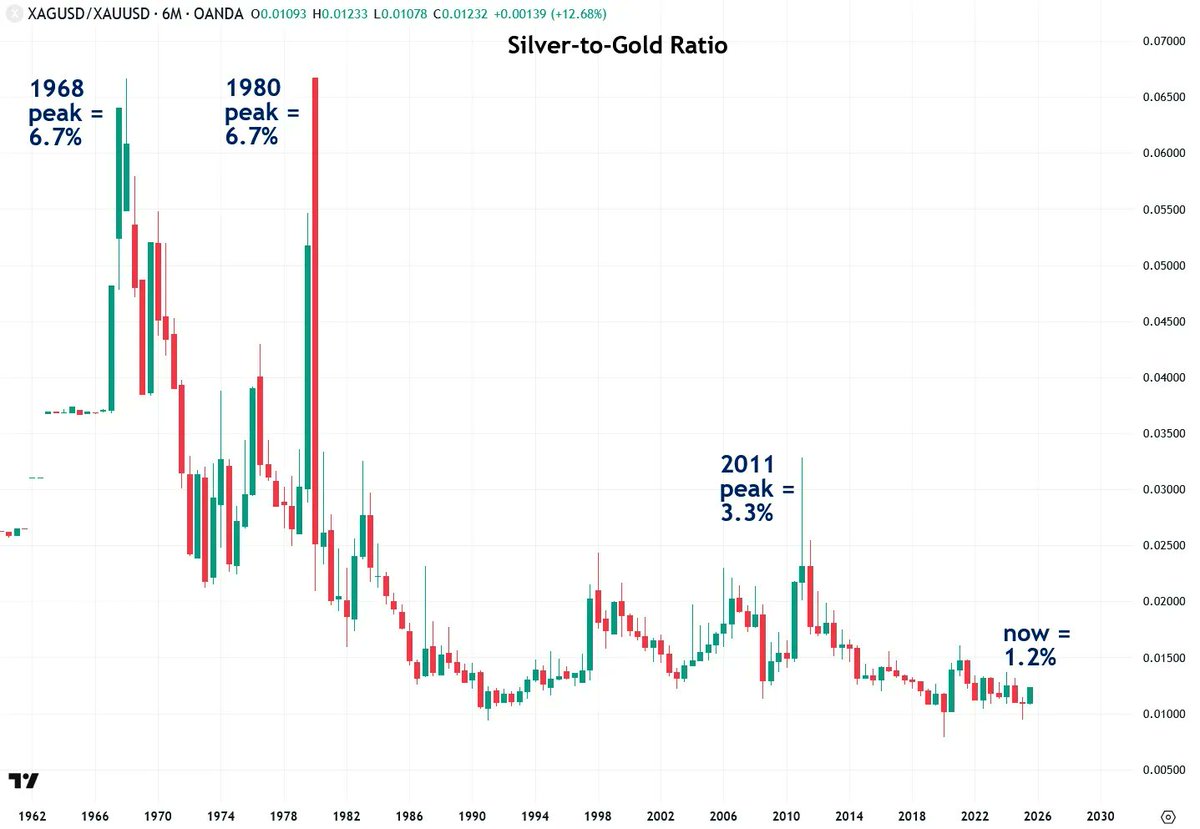
Next let’s move on to another metric that confirms that silver is still much cheaper today than it was at the peaks in 1980 and 2011, despite its recent gains. This time, we will look at the silver-to-gold ratio, which is a useful way to determine whether silver is undervalued or overvalued relative to gold, the leading benchmark in the precious metals market.
While gold has always been more expensive than silver throughout history, the gap between them has varied significantly. At the 1980 peak, silver was 6.7% of the price of gold. At the 2011 peak, it was 3.3%. But now, silver is just 1.2% of gold’s price, which is far below historical levels.
This indicates that silver is extremely cheap by historical standards and still has substantial room for its bull market to continue.
silver vs. gold chart
Now let’s get to the core reason why I believe silver will surge at least tenfold from here, reaching $500 an ounce or more. And that reason is the powerful chart pattern silver has been forming over the past six decades, known as a cup and handle.
Because of the magnitude of that pattern in both duration and scale, it indicates that silver is set to rise by a massive amount to match its proportions.
The $50 resistance level marked the top of that pattern, and as of this week, silver has finally broken above it. This breakout signals the start of what will be the largest bull market in silver’s history. It is a rare opportunity that no investor should overlook. I’m personally heavily invested in both physical silver and silver mining shares, which are leveraged to the price of silver.
silver cup and handle pattern
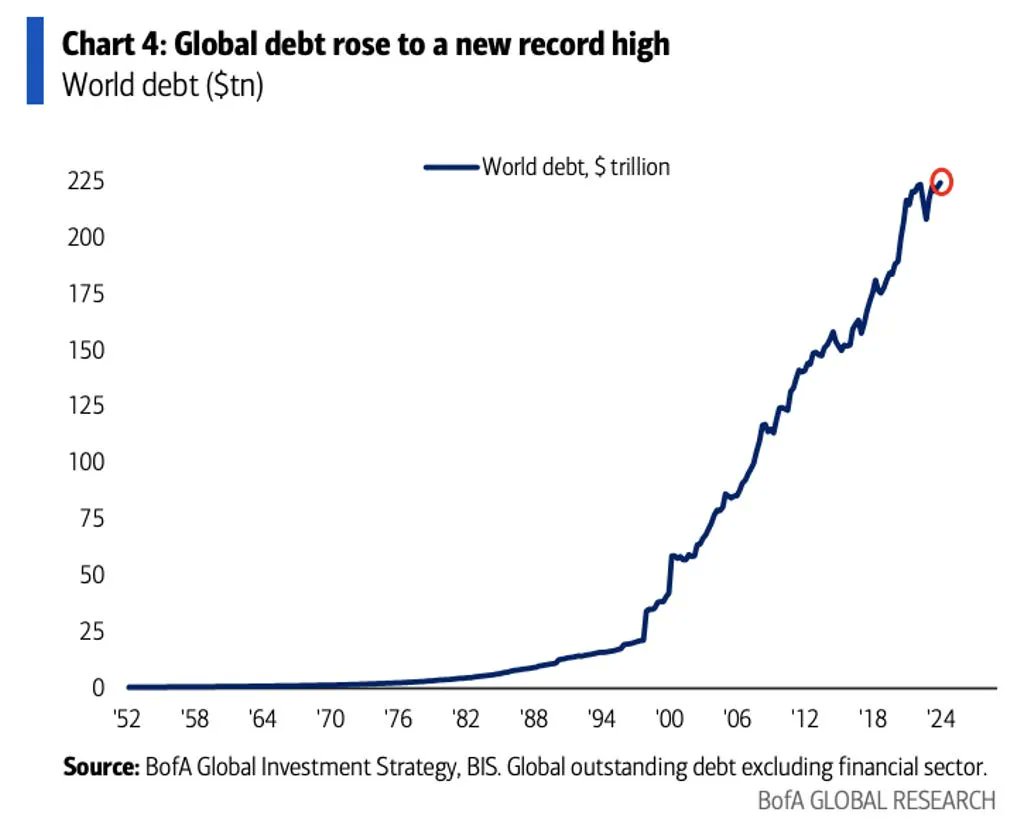
And if you think a tenfold surge in the price of silver from here sounds far-fetched, it’s really not. There are several reasons for this, starting with how undervalued silver remains. But more importantly, we are facing a runaway global debt crisis. As you can see in the chart below, global debt has soared from just $25 trillion thirty years ago to an astounding $250 trillion today.
Unfortunately, this number is poised to rise even more sharply from here, approaching a near-vertical trajectory. This kind of exponential debt growth is a hallmark of the final stages of fiat or paper currency systems, and will cause a massive global financial and monetary crisis that will send silver into the stratosphere. In that scenario, $500 an ounce is not only realistic, it could prove conservative once the coming hyperinflationary storm fully takes hold.
global debt chart
To summarize, I’m extremely excited about silver’s prospects over the next five to ten years. As of this week, silver is beginning its most powerful bull market yet.
I’ve made my case with multiple factors, including how undervalued silver remains by various measures, the anticipated influx of capital from U.S. ETFs, the accelerating global debt crisis, and the extremely promising technical setup implied by the six-decade-long cup and handle chart pattern.
At this point, I believe everyone should own at least some silver—even if it’s just a few ounces.
If you found this report valuable, it’s just a small preview of the kind of content subscribers to my best-selling newsletter, The Bubble Bubble Report, receive regularly.
Want more? to sign up as a free or paid subscriber.
Kind regards,
Jesse Colombo
Precious metals analyst and investor. Advocate for free markets and sound money. Recognized by the London Times for predicting the 2008 Global Financial Crisis.
Disclaimer: the information provided by Jesse Colombo, The Bubble Bubble Report, and related content is for informational and educational purposes only and should not be construed as investment, financial, or trading advice. Nothing in this publication constitutes a recommendation, solicitation, or offer to buy or sell any securities, commodities, or financial instruments.


2025年11月18日星期二

等待白銀50美元支撐位確認

 1980年:白銀衝上48美元後,短短兩週內暴跌30%。到第6週跌幅27%,第10週已重挫77%。

2011年:白銀觸及50美元,兩週內下跌35%,第6週累計跌幅28%。

2025年:白銀達到54美元,兩週內僅回落13%。高峰後第6週,跌幅只有8%。

白銀在這個價位從未表現得如此頑強。它正在一步步贏得我們上個月提到的那種「市場信任」。

1980年與2011年在前6週的跌幅百分比與時間節奏,驚人地相似;2025年卻完全不同,反而正在構建明顯的看漲形態,並在低時間框架上牢牢守住所有動能。

價格在高位區間停留得越久,這個區間就越穩固。舊高點逐漸轉化為新地板,信任逐步建立,資金輪動也會全面啟動。

一旦50美元這個地板徹底鎖死,此時,「地板」比「天花板」更重要。


同時別忘了,這是現代金融史上規模最大的突破形態。


2025年11月7日星期五

趨勢逆轉: 2025 年增長突然加速,宣告「緊縮時代」的終結。

 全球印鈔機已重啟!而且油門踩到底!🚀

最新數據顯示,全球貨幣供給總量已飆升至創紀錄的 142 萬億美元!


🔹 趨勢逆轉: 2025 年增長突然加速,宣告「緊縮時代」的終結。

🔹 美元助攻: 美元貶值讓全球流動性數據看起來更加龐大。

🔹 驚人事實: 中國的貨幣供給量 (47.1T) 現已超過美國和歐盟的總和!


在討論任何資產價格之前,請記住這個數字。


這就是你腳下流動性的浪潮。


https://www.threads.com/@top3pct/post/DQt-kGjEeS9?xmt=AQF0clxgyKuyW6PtSeu33Gv0iABndcL7h8rYIa-fFXwHBpuXF6HV7YFRgHqY5zzhKSllApcg&slof=1

2025年11月2日星期日

中國黃金走廊


Ray Dalio said: "Countries are letting their reserves or assets go down and acquiring gold."

 Central banks bought more gold in 2025 than any year in history.


They're not telling the public why, but their actions speak volumes.


Here's what they see coming:


Wall Street is still sleeping on gold

 $4.5T into cash. $2.7T into equities. $2.1T into bonds. 


Gold? Just $0.1T since 2020.


Wall Street is still sleeping on gold


– while central banks quietly load up in record amounts. 🏆


 #Gold #CentralBanks #InGoldWeTrust #IGWT @IGWTreport


世界最大的金礦


受地緣政治緊張局勢、經濟不確定性和央行持續購金的影響,金價已創下歷史新高,今年以來漲幅近60%,本月(10月1日至27日收盤價平均值)突破每盎司4000美元大關。目前對黃金的需求水準引發了人們對黃金儲量是否即將枯竭以及人類是否已達到「黃金高峰」的質疑。事實上,一些分析師認為,全球黃金產量已經達到或接近峰值,過去十年一直停滯在每年3000至3300噸之間。雖然新的金礦仍在不斷被發現,例如CNBC近期報道的中國湖南省萬谷金礦,但大型金礦儲量正逐漸減少,大部分黃金產量仍來自已經開採數十年的老礦。

那麼,哪些礦場每年黃金產​​量最高呢?根據Mining.com網站發布的公司報告數據顯示,內華達州的金礦在2024年生產了270萬盎司(76.5公噸)黃金,與烏茲別克穆倫陶金礦的預計產量(268萬盎司)相近。穆倫陶金礦自1960年代末期開始開採。位於印尼西巴布亞省的格拉斯伯格金礦於1980年代被發現,是全球第三大黃金供應地(2024年產量為186萬盎司,約59噸)。緊隨其後的是位於俄羅斯北葉尼塞伊斯基區的奧林匹亞達金礦(144萬盎司,約40噸),該礦於1975年被發現。


https://www.statista.com/chart/23053/biggest-gold-mines-by-tonnes-produced-annually/ 

2025年10月29日星期三

印度重新把白銀貨幣化


實物黃金和紙黃金的分別

 很多人以為買了黃金ETF(如 GLDIAU),就等於擁有金庫裡的黃金。

這是一個常見的誤解。


你持有的其實是「信託份額」,不是「黃金本身」。

簡單來說,你擁有的是一張「黃金資產的憑證」,它代表你對一整批黃金的部分權益。


關鍵區別在這裡:


🔹 誰能換真金?

只有「授權參與者」(Authorized Participants,如華爾街的大型金融機構)能用巨額的ETF份額,向信託換取實體金條。


🔹 散戶能做什麼?

你我這樣的散戶投資人,無論持有多少,都無權要求領出實體黃金。我們只能在市場上用現金買賣這些「憑證」。


黃金ETF提供了無與倫比的交易便利性,但你犧牲的是實物所有權。它更像是黃金價格的追蹤工具。


投資前,請務必分清楚「紙上富貴」與「實物在手」的根本區別。


#黃金 #ETF #GLD #IAU #投資理財 #資產配置 #實體黃金 #紙上黃金 #投資冷知識


2025年10月28日星期二

各大機構2026金銀預估

 LBMA 暨 LPPM 京都年會結束了。


大家關心的各機構價格預估,都在這幾張圖表當中。


各機構價格預估隨市場變動而調整,實際數據請依各機構最新發布報告為準。


2025年10月22日星期三

印度重新將白銀貨幣化

 印度已經開始使用實體#黃金和#白銀作為其銀行系統的抵押品。哇😮。


2025年10月8日星期三

2025 黃金採礦成本

 檔不住!金屬聚焦(Metals Focus)發布 TOP 12 礦商股東現金成本,正式跨過 2,500 USD / toz。


2025年9月1日星期一

金銀歷史大突破,八種解釋誰最牛?

 8月29日,紐約COMEX期貨金再次突破3,500美元大關,最後報收於

3516.1美元,再次創下歷史最高紀錄。本周金價累漲2.86%,8月累漲5.2%。另外,COMEX期貨銀時隔漫長的14年又突破40美元大關,報收40.75美元/盎司,本週累漲超4%,8月累漲10.76%。在國內實體金市場上,國內多數品牌黃金首飾克價已突破1,000元/克。

為什麼本週五金銀價格實現了出人意料的歷史性的重大突破?


https://www.youtube.com/watch?v=vrofUVBIEww&list=FLd_A4sXy5tSQ-F1l2dfEvBA&index=11


2025年5月1日星期四

Can Gold Reach $16,000?


As we are in the final stages of a debt cycle that is causing gold to skyrocket, the question arises: how high can gold go?

Comparing the current bull run to the previous two points to a gold run as high as $16,000 per ounce.

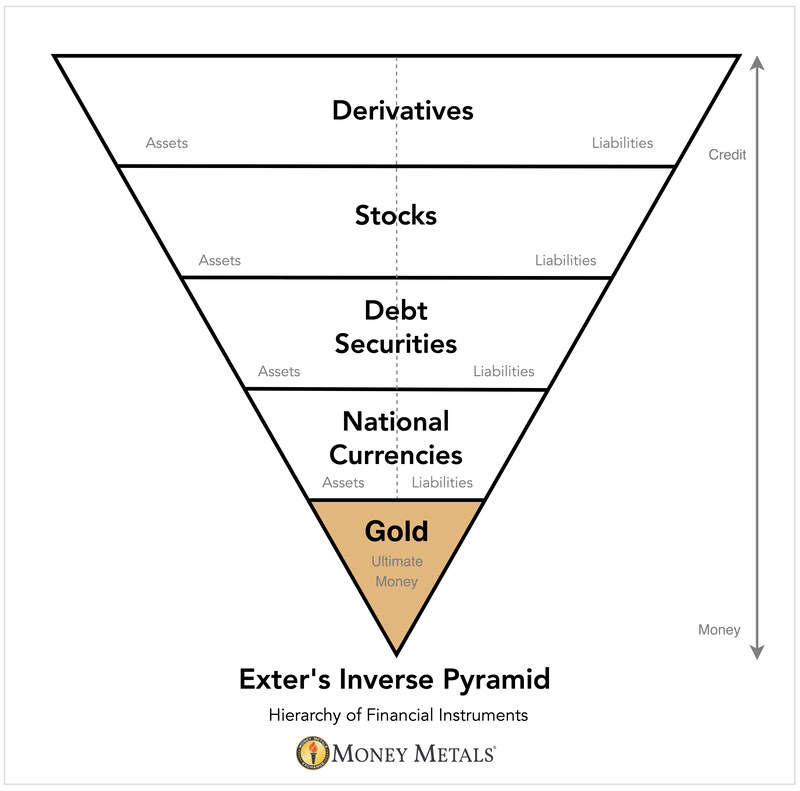
I typically analyze the gold price through a framework of how gold relates to "credit assets" (national currencies, debt securities, equity, etc.). Simplified, trends in the ratio between gold and credit assets tell us where we are in a debt cycle, and where we are in a debt cycle reveals in what direction the gold price is heading.

In an economic boom, capital flows into credit assets (debt), and the gold price stalls. When markets exhibit excessive confidence in credit, financial bubbles tend to form.

When the bubbles pop, investors flock to gold until a new equilibrium is established in the financial system between money without counterparty risk (gold) and assets with counterparty risk (credit).

Money Metals Inverse Pyramid

Our version of the financial system based on Exter’s inverse pyramid.

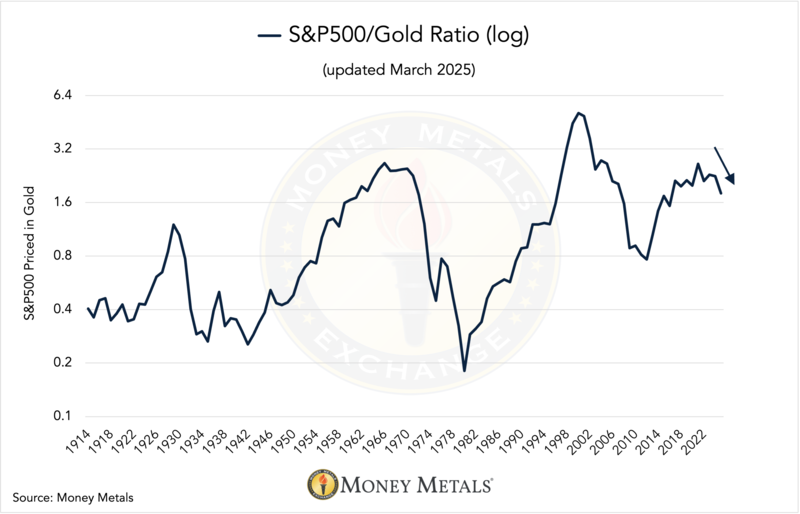
We will use a gold-to-credit ratio to examine debt cycles wherein the S&P 500 stock index is divided by the gold price. As can be seen in the chart below, this ratio shows there have been four debt cycles over the past 100 years.

SP / 500 Gold Ratio Chart

The S&P 500 index priced in gold can be used as an indicator for peaks and bottoms of debt cycles. For more examples, go here.

The first cycle ended in the late 1920s, the second in the 1970s, the third after the dot-com bubble, and the fourth is ending as we speak.

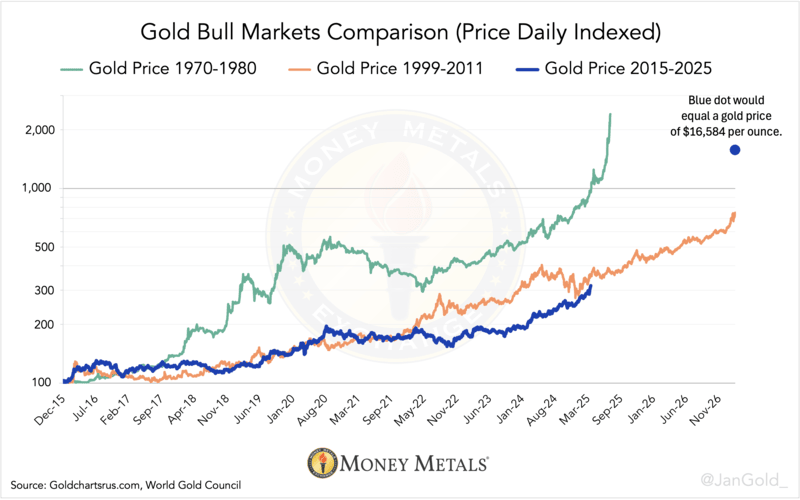
To get a sense of how high the gold price can go during this bull market, let’s compare its price action to the two previous bull markets. (The gold price jumped up in 1933 due to a one-off devaluation of the dollar against gold, so we can’t use gold price data from that period.)

From 1970 until 1980, the price of gold rose 23-fold. From 1999 until 2011, gold went up 6.5X. On average, that’s a 16-fold increase. Measured from the most recent bottom in 2015, gold going up by 1700% would produce a price peak of over $16,000 per ounce.

Gold bull market comparison between today’s bull market and the two previous ones.

When gold was trading at $2,700 an ounce in January, I calculated that gold could reach $8,000 this decade. While I feel more comfortable sticking to my conservative estimate, I wouldn’t be surprised if gold overshoots big time. If history is any guide, it will.


原文 

2025年4月7日星期一

China’s Gold Reserves Going Through the Roof

 The People’s Bank of China (PBoC) continues to buy unprecedented amounts of gold as the global financial is deleveraging (i.e. investors exchange credit assets for gold).

In 2024, the Chinese central bank covertly bought 570 tonnes, encouraging gold’s ascent in global international reserves by 4%, the largest gain in four decades.

 Gargantuan Gold Purchases by the Chinese Central Bank

This article is an analysis of formal and informal sources that indicate the PBoC is currently sitting on more than 5,000 tonnes of monetary gold located in Beijing – more than TWICE what has been publicly admitted.

Legacy media outlets routinely withhold crucial information from investors by principally reporting on official data on gold purchases by monetary authorities. In reality, the Chinese central bank is buying many multiples of what it’s officially disclosing, and investors should take note.

Combine large purchases by the PBoC and other regional central banks with initiatives in the East to settle trade through non-dollar ventures like mBridge and possibly gold stablecoins, and we should expect the international monetary system to continue shifting towards gold in the years ahead. Especially given today’s excessive debt levels, geopolitical tensions, and trade wars.

China Is Secretively Buying 5x More Gold Than Is Reported

Since the Ukraine war began, data show, China’s central bank has been buying roughly five times more gold than what it discloses to the International Monetary Fund (IMF).

But it’s more difficult to get an accurate estimate of how much it owned at the start of the war so we can determine how much it owns now, in total. More on that later.

Let us start off with data from the World Gold Council’s (WGC) quarterly Gold Demand Trendsreports on precious metal buying by central banks in aggregate. From the WGC:

Central bank demand is calculated using information from three different sources. Monthly International Financial Statistics produced by the IMF serve as an initial check for central bank transactions… A second vital source is confidential information regarding unrecorded sales and purchases. The final element in calculated net central bank purchases is analysis of trade flow data.

These confidential sources regarding unrecorded purchases and trade flow data are important themes in our present analysis, as there is no other way to ascertain what the PBoC does behind closed doors.

By comparing the WGC’s quarterly estimates with official data from the IMF, a glaring disparity is revealed since 2022 when the war in Ukraine broke out.
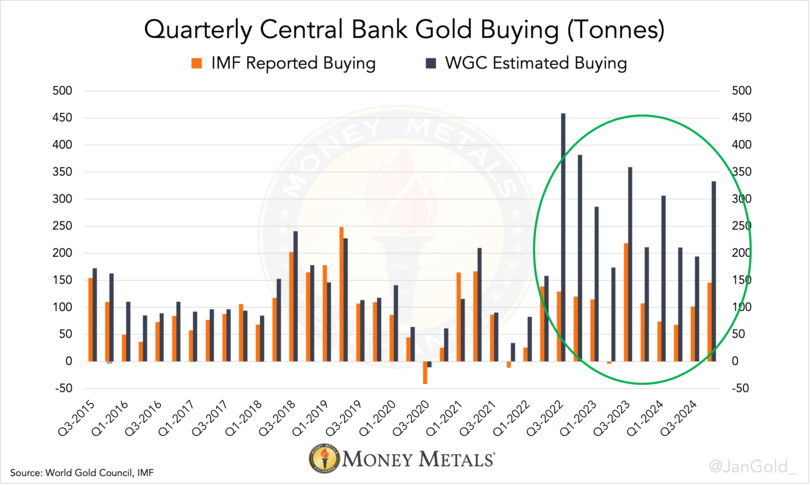
Chart 1. The difference between WGC and IMF data reflects unreported central bank gold buying.

Chart 1. The difference between WGC and IMF data reflects unreported central bank gold buying.

According to two sources familiar with the matter, but who prefer to stay anonymous, the difference is mainly caused by “unreported purchases” by the Chinese central bank.

My approach has always been to take eighty percent of the difference between WGC and IMF figures and label that as secretive Chinese buying.

For instance, using this approach, I calculated that the People's Bank of China acquired 280 tonnes during the third quarter of 2022.

In December 2022, the Financial Times published a similar estimate that confirms the accuracy of my sources and methodology:

Mark Bristow, chief executive of Barrick Gold, the world’s second-largest gold miner, said China had bought tonnes of gold around the high-200s mark [in Q3 2022], based on his discussions with numerous sources.

Gold industry insiders—whether working at bullion banks, mining companies, refineries, consultancy firms, or secure logistics companies—sometimes exchange information. It’s through these interactions that estimates are conceived about the volume of secret gold buying by the Chinese central bank.

Thus, if one has access to one or multiple nodes in this network, it can piggybank on their intelligence. More on this below.

Other evidence of the PBoC’s covert gold acquisitions is the surplus in the Chinese gold market since 2022.

In the past three years, China’s import plus domestic mine supply exceeded withdrawals from the vaults of the Shanghai Gold Exchange (SGE). As the SGE is the center gold bourse in China—through laws and tax incentives most supply and demand flows through this exchange—an observed surplus must reflect acquisitions by the local monetary authority.
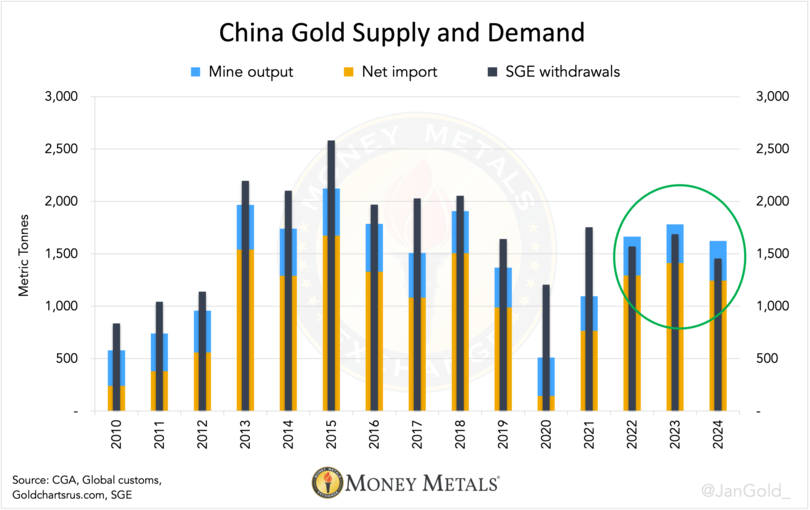
Chart 2. I’ve checked with sources close to the SGE that tell me the giant surplus is not being accumulated in SGE vaults, so it must end up in the PBoC’s vaults.

Chart 2. I’ve checked with sources close to the SGE that tell me the giant surplus is not being accumulated in SGE vaults, so it must end up in the PBoC’s vaults. 

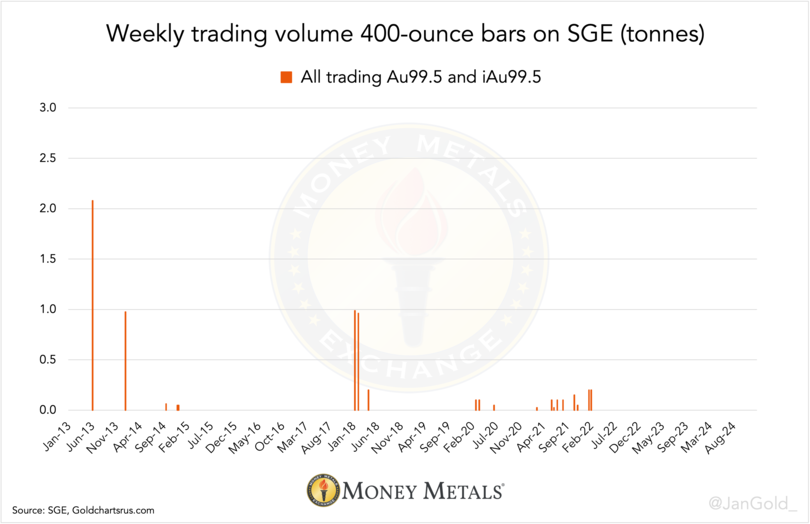
Another piece of evidence is the gold exported directly from the London Bullion Market to China. Because in London gold trade is conducted in large 400-ounce bars, but on the SGE, the private sector only trades in 1-kilogram bars, any gold moving directly from the U.K. to China is destined for the Chinese central bank.

The smoking gun as to Chinese government stockpiling is when we see a continuation of large exports from Britain to China whilst gold in Shanghai is trading at a discount versus London.

Obviously, no bullion bank would buy gold in London to sell at a loss in China. What actually happens is that the PBoC buys gold in London and lets bullion banks transport the metal to Beijing. In these circumstances, bullion banks (not the PBoC) must deal with customs departments and so the flow of gold is recorded.
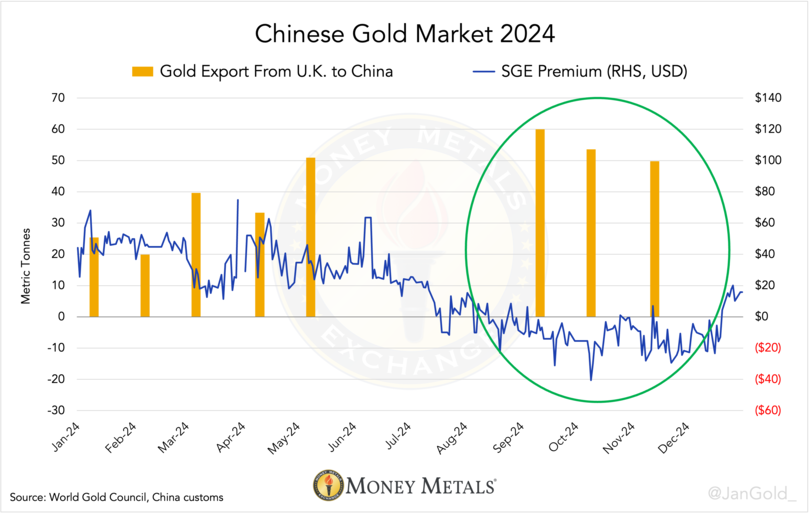
Chart 3. Gold exports of 400-ounce bars from the U.K. to China go straight to the PBoC. China’s central bank has surreptitiously bought 1,800 tonnes from Q3 2022 through the end of 2024, which is five times more than what’s officially reported.

Chart 3. Gold exports of 400-ounce bars from the U.K. to China go straight to the PBoC. China’s central bank has surreptitiously bought 1,800 tonnes from Q3 2022 through the end of 2024, which is five times more than what’s officially reported.

The PBoC Secretly Holds 5,000+ Tonnes of Gold

For dessert, let’s estimate how much gold the Chinese central bank owns in total.

We know how much gold it bought every quarter going back to 2010 when the WGC’s Gold Demand Trends data began. To get a ballpark estimate of how much it owns now, all we need is an estimate of how much it owned at any point in time since 2010.

I have been fortunate that on two occasions well connected industry insiders shared with me how much they thought the Chinese central bank owns. On the first occasion, in late 2015, an insider told me that from within his network, he tallied 3,300 tonnes. The second source was more conservative and conveyed in June of 2024 his estimate was approximately 4,000 tonnes at that time.

When I reverse engineer the second estimate to 2015, then take the average of the two estimates, and calculate what has been added per quarter ever since, it produces an outcome of 5,065 tonnes for the end of 2024.

So, to the best of my knowledge, 5,065 tonnes is the weight of fine gold that the Chinese central bank currently stores in the capital Beijing. 

China Lifts Gold in Global International Reserves

If we take into account the PBoC’s hidden gold reserves, as well as surreptitious additions by the Central Banks of Saudi Arabia and others, world official reserves reached an all-time high of 39,547 tonnes at the end of 2024.

As virtually all new monetary gold buyers are located in the East, non-Western gold holdings are rising rapidly and have reached 45% of world gold reserves. The following chart is a perfect visual representation of the shift in global power towards the East.
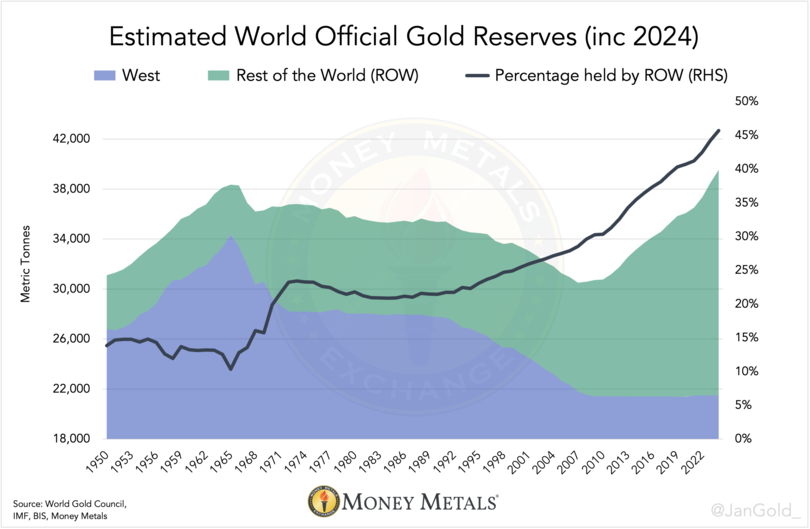
Chart 4. Non-Western central banks nearly hold as much gold as their Western counterparts.

Chart 4. Non-Western central banks nearly hold as much gold as their Western counterparts.

My personal estimates of world official gold reserves, combined with Currency Composition of Official Foreign Exchange Reserves (COFER) data by the IMF, unveil gold’s percentage of global international reserves jumped up 4%, to 21%, in 2024. That’s the biggest surge in more than four decades.
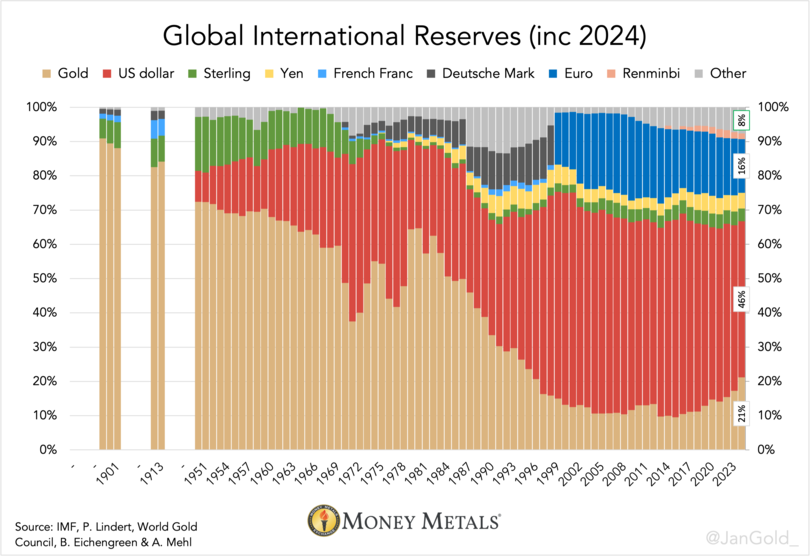
Chart 5. Next to gold, small currencies (“other”) are also on the rise in international reserves.

Chart 5. Next to gold, small currencies (“other”) are also on the rise in international reserves.

Next time you read claims that there is no de-dollarization actually occurring, please urge the naive writer to include gold in his statistics as to foreign reserves!

Notes

To properly understand why gold exports from the U.K. to China must be for the PBoC, please refer to my previous articles (herehere, and here) that take into account all the mechanics of the Chinese domestic gold market.