2015年6月9日星期二

MUST SEE CHART: Major Bank Fraud Adds Up To A Lot Of Silver

The amount of fraud taking place in the major banks throughout the world is staggering to say the least.  Ironically, the only market that isn’t manipulated, is the silver market… so they say.  To make it seem as if the regulators are on the ball, many of the major banks have been found guilty of committing one fraud or another, paying large fines and settlements. 

The most recent settlement by the criminal bankers was a cool $5.6 billion for rigging the foreign currency markets for their own financial benefit.  The banks responsible for this sort of illicit behavior comes from the list of typical seedy characters; Citigroup, JP Morgan, Barclays, RBS and UBS.  You can read all about it in the Wall Street Journal article.

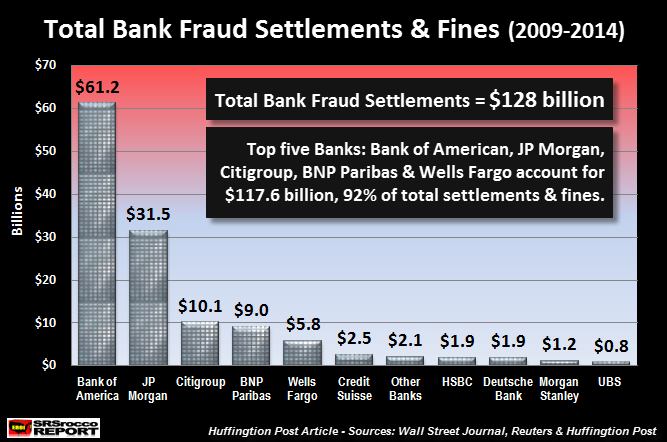
Even though $5.6 billion is a hefty figure, when we add up the total fines and settlements paid by the Banking Industry since 2009… it’s a serious amount of fiat currency.  How Much?  Well, if we look at the chart below, it should offer a pretty good picture:
Total Bank Fraud Settlements 2009-2014

According to a recent article by the Huffingtion Post, the major U.S. and European Banks have paid at least $128 billion in fines and settlements to regulators since 2009.  As we can see, Bank of America gets the first place prize for paying a staggering $61.2 billion in fines, while JP Morgan ranks second at $31.5 billion and Citigroup taking a comfortable third, forking over $10.1 billion.

Scanning across the rest of the chart, we can see the additional fine upstanding banks that participated in criminal activity and their subsequent fines.  Of course, Americans like to brag that the United States is best country in the world to live, so it’s comforting to know that four of the five top corrupt banks (in amount of fines and settlements) in the world are located in the good ole US of A.

The top five banks accounted for 92% ($117.6 billion) of the total $128 billion in fines.  However, the U.S. Banks representing wholesome American icons such as baseball, hotdogs, apple pie and Chevrolet coughed up $108.6 billion of that amount.  It’s certainly reassuring to see our financial institutions working hard to rank first in the world as it pertains to illegal and criminal financial activity.

Major Bank Fraud Adds Up To A Lot Of Silver

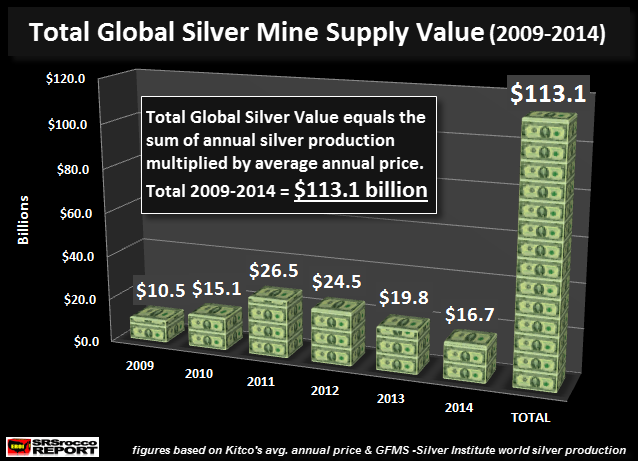
If we consider just how much the U.S. and European banks have paid in fines and settlements since 2009, turns out it could have purchased one hell of a lot of silver.  In order to get an idea of the total value of global silver mine supply since 2009, I put together the following chart:
Total Global Silver Value 2009-2014

Each year in the chart represents the value of world silver mine supply calculated by multiplying total global production by the average annual price.  These figures were based on price information taken from Kitco.com and global silver production figures from the Silver Institute-Thomson Reuters GFMS. 

For example, this is the total value of world silver mine supply in 2014:

2014 World Silver Mine Supply Value = 877 million oz X $19.08 = $16.7 billion

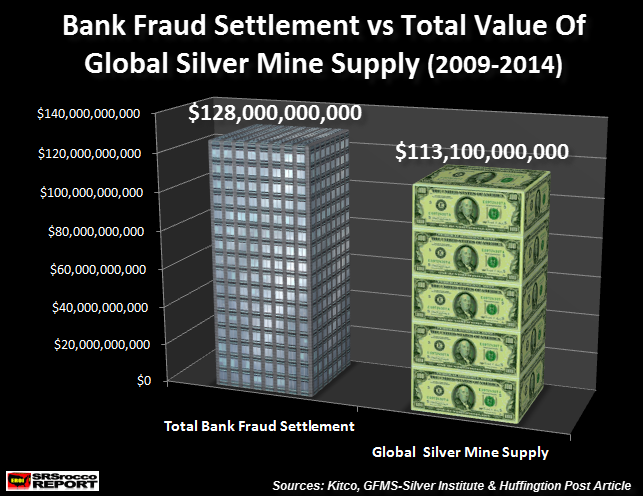
If we add up the figures for each year in the chart, the total value of global silver mine supply was $113.1 billion.  Well, that seems like a lot of money until you compare it to the fines and settlements paid by the major U.S. and European banking institutions:
Bank Fraud Settlement vs Global Silver Value

Amazingly, the major banks paid more in fines than the cumulative value of all silver mined since 2009.  Just think about that for a minute.  The amount of fraud and criminal activity at these major banks forced them to pay fines greater than the value of world silver mine supply.  Of course, the $128 billion in fines they paid is a great deal less than the profits they made.

According to the Huffingtion post article:

Since 2009, the American banking industry alone has racked up nearly $503 billion in profits, according to FDIC quarterly data through the first quarter of 2014.

These fines have made occasional dents in some quarterly earnings, but they’re effectively drops in the banks’ buckets compared to their greater profits.

If the bank fines are “drops in the bank’s buckets”, then it’s good for business for these institutions to continue rigging, raping, manipulating and controlling the economic and financial system.  Thus, anyone at this time who still believes the gold and silver markets aren’t manipulated, needs to check oneself into a local health clinic and receive a Cat-Scan of the brain.

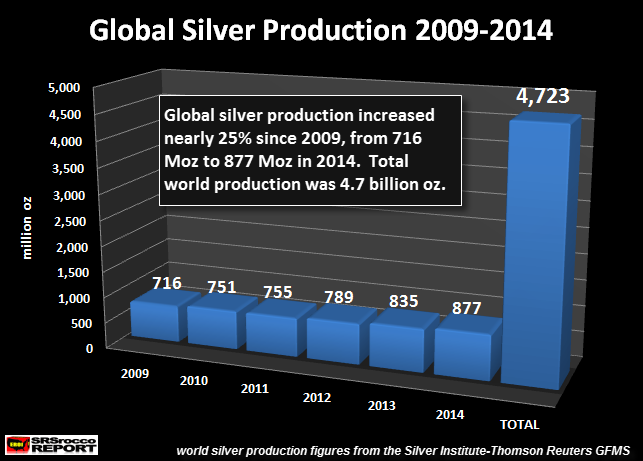
So, how much silver could have been purchased with the fines and settlements paid by the major banks?  The chart below provides the answer:
Global Silver Production 2009-2014

The paltry $128 billion of fines paid out by the major U.S. and European banks could have purchased all the 4.7 billion ounces of silver produced by the world since 2009.  However, this silver production only amounted to $113.1 billion (estimated) and if we add the remaining $15 billion left over… that’s at least another 800 million oz. at the current price. Which means, bank fraud settlements could have purchased at least 5.5 billion oz of silver, including the majority of global production in 2015.

We must remember, gold and silver are supposed to act as barometers against the U.S. Dollar and other assorted fiat currencies.  If the major banks can pay $128 billion in fines (that we know about) over the past six years, how can this not impact the value of the precious metals? 

Currently, it pays the banks to conduct fraudulent, criminal and illicit behavior.   If the U.S. Banks forked out $110 billion in fines since 2009 while their total profits exceeded $503 billion, that’s a pretty good racket.  Fortunately for the precious metal investors, all Ponzi Schemes come to an end.  While this one has gone on longer than we thought, the end may arrive sooner than we expect.

各國央行正在失去對金融市場的控制

每一個大騙局最後都會落幕。

全球各國央行多年來一直通過自己的貨幣手段來操縱金融市場。不知怎麼的,他們已經說服了全球各地的投資者們把數十萬億美元投到了那些收益率低於實際通脹率的債券中去。在相當長的一段時間裡,我堅持認為這是非常不合理的。為什麼會有理性的投資者想把錢投入到那些從長遠看來會降低他們購買力的投資上去。並且當任何一家央行啟動量化寬鬆政策時,理性的投資者應該立即要求提高那個國家的債券回報率。憑空製造貨幣並投入到金融系統中,這將導致現有貨幣的貶值並產生通脹。因此,作為回應,理智的投資者應該驅動利率上升。然而央行們卻告訴每個人,利率將被迫下調,而且他們確實這麼做了。但是現在事情發生了轉變。投資者們開始表現得更加理性而各央行卻正在失去對金融市場的控制。這對2015年剩下的日子來說是一個非常槽糕的信號。

不只是債券收益失去了控制。不管歐洲的財政部門們怎麼努力,它們似乎都無法解決希臘危機的問題。意大利、西班牙、葡萄牙和法國的問題也在繼續發酵。本週,希臘成為了自20世紀80年代以來第一個拖欠國際貨幣基金組織貸款的國家。

在亞洲,股市波動幅度很大。上週四,在股指反彈彌補當日跌幅之前,上證綜指上週四猛跌了​​5.4%,但收盤時竟然還上漲了0.8%。這種極端的波動是非常糟糕的信號。因為市場往往在極端波動時期崩潰。

請記住,股指一般在市場平靜時趨於上漲,而在市場波動大的時候趨於下跌。因此絕大多數的投資者不想看見大幅波動。但不幸的是,我們現在看到的全世界證券市場的情況就是充滿大量的波動。以下來自於《華爾街日報》:

羅素投資集團的資深投資策略師,沃特-斯特肯布姆說:“過去幾天裡的波動十分驚人,特別是債券市場的波動。”他表示,股票和貨幣市場出現了過度波動。

基準十年期的德國國債的收益率達到了0.99%,是九月份以來的最高水平,但後來又下跌至0.84%​​。美國十年期國債的收益率在周四早些時候達到了2.42%,創2015年的歷史新高,但最近又跌回了2.33%。債券收益率隨著價格的下跌而上漲。

有時候,債券收益率上漲是因為投資者把錢從債券市場中抽出來轉而投到了股市裡,因為他們覺得股市的走向真的非常好。但這並不屬於這種情況。正如皮特·切爾指出的,我們現在看到的這個債券市場的大波動是由“純粹的市場恐慌”導致的。

在最近某日的開盤前,飛利凱睿證券公司的皮特·切爾在報告中寫道:“是時候該在近期減持美國股票了,美國股指可能會出現3%至5%的跌幅。美國財政部的弱點是'去風險化'的交易而不是'有風險'的交易。在去風險化的交易中,低收益率往往被視為有風險的資產,而不是一個安全的避風港。”並且,伊德富曼資本市場(ED & F Man Capital Markets)固定收益率和信貸部門負責人湯姆·狄·加羅瑪告訴彭博社說:“根據以往發生在歐洲的歷史經驗來看,這純粹是市場恐慌。華爾街的大多數人在採取新觀點之前都很謹慎。

但是,這是不應該發生的。

看見美聯儲能夠成功地使用量化寬鬆政策來壓低利率後,歐洲央行決定也嘗試這麼做。但對他們來說不幸的是,投資者們開始表現得更為理性。各央行都開始漸漸失去對金融市場的控制能力,並且債券收益率一直在飆升。我認為當彼得·布克瓦說以下這些話的時候,他對我們目前的處境做了非常好的總結:

我在之前已經說過了,但抱歉我現在還要再說一遍。我們所看見的全球市場的內在矛盾其實是被零利率、負利率和量化寬鬆這些被視為保守政策實則非常危險的現代貨幣政策所加劇的。這個矛盾很簡單:如果通脹率變高,那麼將會導致更高的利率,而這是央行們極力想壓制的。

是好是壞,現在顯而易見了。歐洲央行第一次奪回了市場話語權,並且是用十分暴力的方式。在美國,債券市場觀望著美聯儲在上調利率方面欲擒故縱的把戲(它永無止境)。美國國債市場正在收緊。 4月中旬以來,5年期國債收益率上漲了40個基點,10年期國債收益率上漲了55個基點,而30年期的更是上漲了65個基點。

如果全球投資者變得越來越理性,那麼這僅僅只是個開始。全球的債券收益率都應該會比現在要高得多得多。這也就意味著,債券價格的下降空間可能很大。可能會加速全球債券市場崩潰的一件事就是希臘危機。希臘政府和債權人之間的談判已經拖了四個月,還沒有達成協議。現在,希臘未能在約定的6月5日給國際貨幣基金組織償還貸款,正在請求國際貨幣基金組織讓它把本月所有到期的貸款累積到六月底一起償還。

週四,希臘《每日新聞報》報導,希臘請求把自己要償還給國際貨幣基金組織的四筆六月到期的債務付款累積在一起,這樣它就能在六月底作一次性償還了。

《每日新聞報》稱,外界預期國際貨幣基金組織會同意這個請求。這可能意味著希臘不必支付週五到期的第一筆共計3億歐元的貸款。

本月希臘面臨著四期要還給國際貨幣基金組織的貸款,共計15億歐元。

當然,如果希臘和債權人之間的協議到月底還沒有達成,那麼希臘不會支付其中的任何一筆貸款。並且隨著時間流逝,這份協議似乎越來越不可能達成。在這一點上,希臘激進左翼聯盟完全不接受債權人要求希臘實行的一攬子經濟改革措施。以下來自於英國《衛報》的一篇文章:

上週四,在布魯塞爾的最新會談上,齊普拉斯看到了自己的激進左翼聯盟黨中那些持高度懷疑論的成員所表達的憤怒。歐盟委員會主席讓·克洛德·容克向希臘轉交了希臘債權人五頁最後通牒文件,但這份文件被希臘描述成令人震驚的、挑釁性的、可恥的。

希臘社會福利部副部長季米特里斯說:“這項協議永遠不會通過。如果他們債權人不讓步,我們國家也不會損失什麼。總有比我們簽署一份不光彩的羞恥的協議代價要小的其他選擇。

我認為我們最後不會看到希臘和債權人之間能達成協議。為什麼呢?好吧,我傾向於同意安德魯·裡利可的一些分析。

歐元區不希望對當前的希臘政府做出任何妥協,原因有以下幾點:一、他們認為希臘威脅退出歐元區是空談,所以他們不相信自己需要做出妥協。他們這麼認為,不僅是因為內部調查表明希臘並不想退出歐元區,還因為就算他們真這樣做,也不會對歐元構成任何真正的威脅; 二、因為他們(尤其可能是德國總理默克爾)認為,只要施加足夠的壓力,希臘政府就可能會崩潰,並且被更願意合作的政府取代。這在之前的歐元區危機中就多次發生過,包括意大利和希臘本身;三、因為任何與希臘達成的協議都會被視為被捲入或代表著希臘政府的勝利。而這些勝利將會威脅到包括西班牙,葡萄牙,意大利,芬蘭甚至荷蘭和德國在內的歐元區成員國政府的政治立場。

此外,我目前還不清楚的是,無論希臘做了多少口頭妥協,在此階段歐元區債權人對基於承諾達成的任何協議有多大的興趣。事情已經遠遠發展到不是單靠字面協議可以解決的程度了。他們需要看到希臘做出行動:切實的經濟改革和切實可信的基本盈餘目標,以及希臘國內一種長期的可持續改革的政治氛圍。這意味著其他歐元區國家最終可能會拿回他們的錢。而當前的希臘政府幾乎完全不可能做到這些。

從希臘激進左翼聯盟這邊來看,他們對這個協議並沒有多大興趣。他們認為緊縮政策已經毀了希臘人的生活,並且再施行幾十年的緊縮政策就意味著希臘經濟再多遭受幾十年的痛苦。從他們的觀點來看,就算會因為違約或甚至是退出歐元區而遭受短期的經濟陣痛,也比繼續實行現在的緊縮政策要好得多。

沒有達成協議的話,歐元絕對會大幅度貶值而歐洲的債券收益率將會上漲到頂峰。我完全相信鑑於歐元區現在的構成,這將是歐元區結束的開始,並且我們正處在一場巨大的歐洲金融危機的邊緣。

當然這場即將到來的金融危機將不僅僅局限在歐洲。現在全球金融系統比過去任何時候都要聯繫緊密。並且其中有價值數十萬億美元的衍生品被綁定在了外匯匯率上,還有價值505萬億美元的衍生品被綁定在了利率上。當這一巨大房屋倒塌的時候,各國央行們將沒有能力阻止它。

最後我們可能看到整個央行體系的完全崩塌嗎?

這正是鳳凰資本研究公司(Phoenix Capital Research)所認為的即將發生的狀況

2014年可能會被當做當今全球央行體系崩塌的起始年而被載入史冊。

但這一進程無論如何也不會很快進行。

各國央行和政治精英會拼盡全力來維持現狀,即使這意味著違反了法律(凍結銀行賬戶或基金以停止取款)或關閉市場(道瓊斯指數在一戰期間曾被關閉了四個半月)。

到處都將會出現崩潰和資產價格的急劇下降(下降幅度20%-30%)。然而,歷史告訴我們,當一個金融系統出現崩塌的時候,整個過程需要花費數年甚至更長。

我們站在了一個前所未見的巨大的經濟轉型的懸崖邊上。

儘管當前情況在大部分人眼裡似乎是非常正常的,但事實是全球金融系統存在著根本上的缺陷,並且這個系統的裂縫正開始出現在所有地方。

但它不應該發生。

所有的騙局最後都會土崩瓦解,並且我們將吃很多苦頭得到這一教訓。

鳳凰iMarkets譯自ZeroHedge(編譯/雙刀)

2015年6月6日星期六

Gold Prices Can Go One Of Two Ways – Either Way, You Can Profit

James Rickards

Janet Yellen, chair of the Federal Reserve Board, gave an important speech in Providence, Rhode Island, on Friday, May 22. The speech was widely followed by the press and pundits.

News outlets pounced on her statement that “I think it will be appropriate at some point this year to take the initial step to raise the federal funds rate.”

Headline writers warned that the Fed was about to raise interest rates. Markets immediately reacted, sending the dollar up and stocks down on fears of higher rates.

There was only one problem with the reporting, the analysis and the market’s knee-jerk reaction. Reporters left out the biggest little word in the English language — “if.”

Those who took the time to read the actual speech instead of relying on reporters saw that Yellen’s headline quote started with the phrase, “if the economy continues to improve as I expect…”

In other words, Yellen’s prediction of a rate increase is conditional on her forecasting ability. The truth is that no major institution has a worse forecasting record than the Federal Reserve.

Yellen was candid about her abysmal forecasting record. Elsewhere in her speech, she said, “I can assure you that any specific projection I write down will turn out to be wrong.” So we can give the Fed chair credit for honesty about her forecasting, even if reporters were cherry-picking her speech to give investors the wrong impression.

What Yellen was really saying is what she has said all along. The Fed is “data dependent.” If the data come in strong, the Fed will raise rates. If the data remain weak, the Fed will not raise rates. So what do the data tell us?

Yellen expects the data on growth, inflation and job creation to strengthen, which is why she sounded her warning. But a look at actual data shows that GDP growth will be close to zero for the first half of 2015, job creation has slowed significantly since last November, real wages are flat and inflation has been below the Fed’s target for three years.

Growth in China is slowing dramatically, and what little growth Europe has shown has come entirely from the currency wars, including negative interest rates, quantitative easing and a cheap euro.

There is nothing on the horizon to change any of this. U.S. growth may struggle back to the same 2% level is has displayed since 2009, and some job growth will continue. But these developments are nowhere near what Yellen said she needs to see before raising rates. In short, expect more of the same weak growth and zero rate policy we’ve seen for the last seven years.

If Yellen’s warning and the market reaction were false alarms, what can investors expect for interest rates in the months ahead? And what are the implications of that rate forecast for various asset classes, especially gold?

As readers of Currency Wars Alert know, we use the IMPACT system based on inverse probability informed by “indications and warnings” to estimate market developments. You can think of this as reading road signs to figure out where you’re heading, even though the destination is not in sight.

The road signs can validate your path or alert you if you’re heading in the wrong direction. The important thing is to have a mental map of the area and pay attention to the signs.

One fascinating indicator of the past seven years is the direction of interest rates during periods of quantitative easing. The Fed has conducted three programs of quantitative easing since 2008, known as QE1, QE2 and QE3.

The stated purpose of each QE program is to lower interest rates, especially on intermediate-term securities. The idea is to make the yield so low that investors channel funds into other asset classes, such as stocks and real estate.


The higher prices on stocks and real estate are supposed to create a “wealth effect” that causes people to spend more. More spending will then result in higher money velocity and higher nominal GDP. Everything about this theory is flawed, but the Fed believes it, so we need to pay attention if we want to understand Fed policy.

The chart below shows the path of interest rates on 10-year Treasury notes over the past seven years. The shaded areas are the periods of quantitative easing. The red arrows show what happened to 10-year note yields during the QE periods.

Incredibly, note yields did not decline during QE. They rose all three times!There was some volatility along the way, and there were short periods when rates did decline, but the overall impact of QE was to increase rates, not decrease them.


The shaded areas in this chart are periods of quantitative easing, or “QE,” by the Fed. The red arrows show that interest rates on 10-year Treasury notes actually rose during periods of Fed easing.

Equally important for present purposes is that rates declined when the Fed was not doing QE. This is also apparent from a glance at the chart.

Why do rates rise when the Fed is easing and fall when the Fed is not easing? The answer has to do with investor expectations. The Fed may believe the economy is getting stronger, but investors and everyday Americans know better — the fundamentals are weak and getting weaker.

When the Fed prints money (that’s what QE is), investors expect inflation, and therefore rates rise. When the Fed stops printing money, investors expect deflation, and therefore rates fall.

For decades, the mantra on Wall Street has been “Don’t fight the Fed.” That was good advice in the past. But manipulation has gone on for so long and the Fed models are so muddled that a new mantra might be in order — Fade the Fed.

When the Fed is talking strong growth and rate hikes, it’s a good idea to expect the opposite.

The Fed ended QE3 last November. Not surprisingly, job growth and GDP growth rolled over around the same time, and the data have been getting weaker ever since. Interest rates have trended downward since then, despite a recent backup.

The “May Massacre” in bond prices should be seen as a technical cascade triggered by a Bill Gross blog, which resulted in position squaring by hedge funds with leveraged long Treasury positions in an overcrowded trade. The stop loss algos kicked in, and the cascade fed on itself.

Nothing fundamentally changed in May. The secular downtrend in rates, which has persisted since 1981 and accelerated since 2007, is still intact. The end of QE3, combined with tough talk from the Fed, will weaken the economy further and result in lower inflation expectations and reduced yields in the months ahead.

It is difficult to see how the Fed can raise rates in 2015 without sinking markets and the economy completely; therefore, a rate increase should not be expected. The only things that will change this outlook are if the Fed blinks and admits it cannot raise rates or if it starts to talk about QE4. We’ll be watching closely for indications and warnings on both of those events.

How can investors benefit from the huge gap between what the Fed expects and what markets expect? This is a good time to take another look at gold, especially high-quality gold mining stocks.

Gold has two ways to win. If low rates persist, gold becomes more attractive because costs of carry and opportunity costs of holding an asset without yield decline. Conversely, if rates go up, that means inflation is on the way, and the gold price benefits from that also.

Gold mining stocks have been beaten down to the point where stock prices will either go up or the miner will go out of business. That’s why it’s important to stick to the high-quality names in the major indexes.

All the best,

Jim Rickards
for The Daily Reckoning


2015年6月5日星期五

債市扭曲 後遺漸現


王冠一

2015-06-04
歐美債券沽售潮延伸至亞洲,令環球債息升至今年高位。資料顯示,環球主權債平均息率已升至 1.34 厘,相當於去年 12 月底高位。其中,澳洲十年期債息錄得三星期以來最大升幅,同期日本國債息率亦連升三日,至於新西蘭同年期債息亦升至 3.73 厘。


各地經濟數據好轉,歐元區 CPI 六個月來首度回復正數,引發投資者預期通脹升溫。德國最新亦宣布,計劃首次發行30年期通脹掛鈎債券,最終發債規模至少 100 億歐元,難道通脹真是遙遙無期?

另外,全球各地種種因素,皆誘導資金持續流出避險資產:希臘債權人努力避免希臘違約,降低了市場避險需求;美國工業及建築開支數據上升,增加今年內加息機會;日本首季經濟擴張速度為一年來最快,並連續第二季擴張;澳洲首季經濟增長按季增長 0.9% 等。

不過,債息上升並非投資市場的最大隱憂,債市更趨波動才是重點。

雖然聯儲局已經停止量寬,但手上仍持有近破紀錄規模的債券。而且目前歐洲、日本央行仍繼續每月努力於市場上買債救經濟;其中,歐洲央行更可能會在短期內加快買債步伐。

央 行已是債市最大買家,如今還要繼續大量買債,本身已經削弱債券的吸引力;加上監管機構又要求市場參與者減少高風險交易活動及降低高風險資產持有比例,都令 債市流動性大大降低。情況有如某隻股票出現貨源歸邊後,一石能夠激起千重浪,類似情況在債市發生,債息就會變得更波動。

由於債市結構被扭曲,流動性不足,每個價位涉及的買賣宗數都較以往減少,令資產價格面對突發消息、或新公布數據時變得更為敏感。萬一出現大量沽盤時,市場缺乏承接,就容易出現「人踩人」場面。

目前債息低企,十年期德國債息仍貼近零水平;假如通縮危機不再,加上股市暢旺,市場又豈能容忍低回報的債券呢?因此,債市沽售潮看似還沒完結。而投資者則需要有心理準備,債市波動性可能會愈來愈大,如此將會令股市走勢也變得難以捉摸。

股 債環環相扣,以往股市或債市出現波動,另一個市場都有大風浪。不過今年以來,債市愈來愈波動,但股市反而愈趨平靜。以美股為例,近期相對於環球多個主要市 場,顯得異常平靜。標普五百指數過去兩個月上下波幅只有 4.2%,乃 2006 年以來最小。這是暴風雨前的平靜,抑或是十年難得一遇的光景呢?

2015年6月4日星期四

One of World’s Largest Primary Silver Miners Blasts CFTC on Silver Manipulation

First Majestic Silver’s CEO Keith Neumeyer (who advised SD readers in a 2012 interview that “I am a TRIPLE DIGIT silver guy“)  has just stepped to the plate as the first major player in the silver market to call out the CFTC on massive silver manipulation by commercials acting as speculators.
In an open letter to CFTC Chairman Timothy Massad, the CEO blasted the CFTC:

Something is wrong with the price discovery process, since real producers and consumers of silver don’t appear to be represented…” 

Neumeyer’s full letter to CFTC Chairman Timothy Massad (Yes, Gary Gensler is assisting Goldman in other ways now) is below:


http://www.silverdoctors.com/

2015年6月3日星期三

黑客截獲索羅斯電郵:為何談“三戰” 他有多大能量


喬治-索羅斯曾警告稱,如果美國不在中國加入國際貨幣基金組織一籃子貨幣問題上讓步的話,世界第三次大戰將會一觸即發。就在他做出警告幾天后,烏克蘭黑客組織Cyber​​Berkut就曝光了這位億萬富翁其實是烏克蘭幕後真正的操縱手。

在 三份令人震驚的文件中,據稱是這位對沖基金經理和烏克蘭總統波羅申科之間的電子郵件顯示,索羅斯勾畫出了“一個為新烏克蘭制定的中短期綜合策略,”並表達 了他有信心,美國政府應該會為烏克蘭提供軍事援助“提供與敵方水平相匹敵的尖端防禦武器,”最後還解釋說波羅申科的“首要任務是重新取得對金融市場的控制 權,”他保證烏克蘭總統可以獲得美聯儲的援助:“我準備給美國財長傑克·盧打電話,探探他關於雙邊互換貨幣協議的口風。”

烏克蘭黑客組織Cyber​​Berkut 聲稱它侵入了烏克蘭總統辦公廳的服務器並截獲了索羅斯和烏克蘭總統波羅申科之間的私人通信記錄。隨後它在網上公佈了所有截獲的PDF文件。今日俄羅斯電視台披露了更多細節:

黑 客在網上已公佈的三個文件包括了索羅斯起草的“一項新烏克蘭中短期的綜合策略”的草案(日期標註為2015年3月12日);一份未註明日期的關於向基輔政 府提供軍事援助的文件;以及這位億萬富翁給烏克蘭總統波羅申科和總理耶森尤克的一份信件,日期標註為2014年12月23日。

披露的文件顯示,索羅斯支持奧巴馬關於烏克蘭的立場,但他認為美國應該會做的更多。

他深信美國應該會為烏克蘭提供軍事援助,“提供與敵方相匹敵的尖端防禦武器。”

這位以新烏克蘭擁護者自居的84歲商人在其中一封信件中說道,“在這場”牌局“中,美國將會“參與,但不會主導。 ”

索羅斯在信件中說道,西方支持者希望基輔政府“在不違反明斯克協議的前提下恢復烏克蘭的戰鬥力。

除此之外,洩露的文件還稱,為了獲得外國盟友的援助,烏克蘭當局還要求“恢復表邊上的貨幣穩定以及銀行系統的正常運作”以及“維持政府各部門之間的團結”。

索羅斯認為,歐盟通過經濟援助支持基輔政府,強調“歐洲必須達成一個新的框架協議,這個新協議將會允許歐盟委員會每年撥給烏克蘭10億美元的經濟援助。”< br>
鑑於目前的經濟形勢,這位億萬富翁在信中提到,前智利財長安德烈斯·維拉斯科在應邀訪問烏克蘭之後,認為烏克蘭的“金融狀況很嚴峻”。

索羅斯警示波羅申科,由於國家銀行缺乏硬通貨儲備,“新烏克蘭簡直在崩潰的邊緣。”

該信件顯示,這位億萬富翁一直和基輔當局保持聯繫並為他們提供諮詢。


Markets: Be Prepared, The Game Is Getting Close To An End

Jim Rogers

Be prepared. The next time we have a problem in the world it is going to be really, really bad.

Interest rates are at historic lows, they have printed staggering amounts of money. I mean, they can go out and buy stocks or something or print even more money but the game is getting close to an end. We have not had a recession or hard times in America or in the world in 6 years, we are overdue historically.

Jim Rogers is a legendary investor that co-founded the Quantum Fund and retired at age thirty-seven. He is the author of several investing books and also a renowned financial commentator worldwide famous for his contrarian views on financial markets.